
On this page
- Why does fascia and soffit repair go with gutters?
- How much does fascia and soffit repair cost in Fort Wayne?
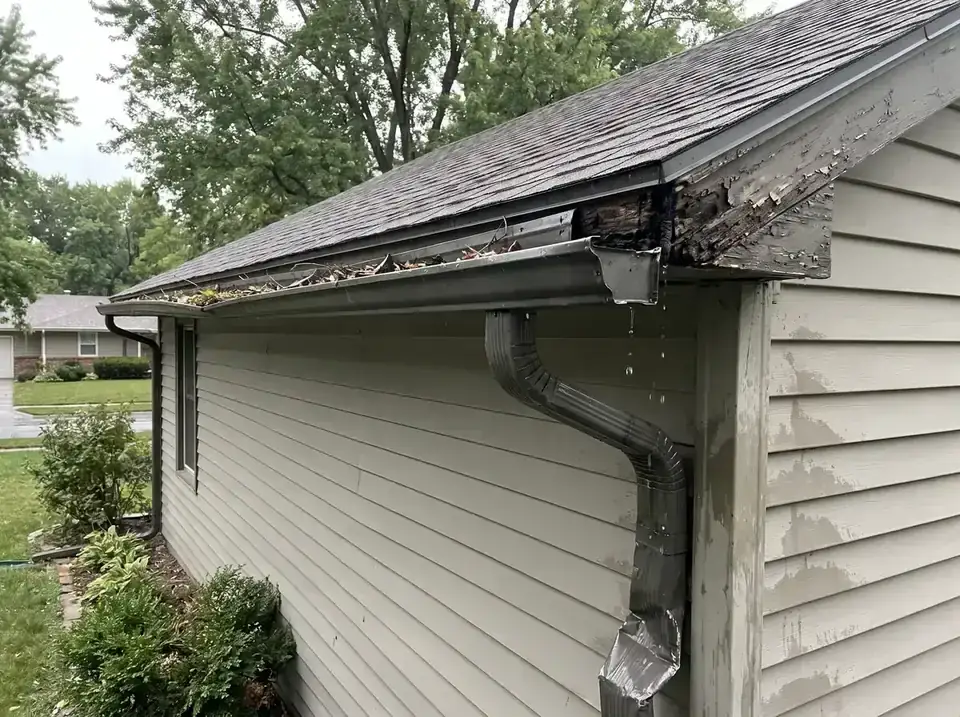
- Signs of fascia and soffit damage
- How fascia and soffit are repaired
- Fascia materials
- Where fascia repairs are common in Fort Wayne
- Soffit, attic air and ice dams
- Historic houses
- What to ask about fascia repair
Why does fascia and soffit repair go with gutters?
Fascia is the board along the roof edge that the gutter hangs on, and soffit is the underside of the overhang. When water gets behind or over a gutter for years, the fascia softens, the fasteners lose their grip and the gutter starts to sag. Replacing a gutter without fixing the wood is wasted money; the new gutter will pull away the first time it fills with ice.
In Fort Wayne, the three ways water reaches the wood are overflow in summer thunderstorms, missing or short drip edge, and ice backing up at the eave in winter. The city averages about 33.6 inches of snow a year and about 39 thunderstorm days, so the wood gets plenty of chances.
How much does fascia and soffit repair cost in Fort Wayne?
Prices depend on how much wood is rotten, the height, and whether the board is painted wood, wrapped in aluminum or replaced with PVC. Gutter repairs nationally average about $390 according to Angi; fascia work on top of that is priced by the length replaced. Ask for the wood repair to be listed separately on the quote.
Signs of fascia and soffit damage
| Sign | What it means |
|---|---|
| Peeling or bubbling paint on the fascia | Water is soaking the wood |
| Dark streaks behind the gutter | Water running behind the trough |
| Soft wood when pressed with a screwdriver | Rot has started |
| Gutter pulling away or nails backing out | Fasteners have lost their grip |
| Sagging or stained soffit | Water or ice getting into the overhang |
| Gaps, droppings or nests | Animals using damaged areas |
How fascia and soffit are repaired
- Remove the gutter along the damaged section.
- Probe the wood to find where the rot ends; soft areas often extend beyond what shows.
- Cut out and replace rotten fascia with new lumber or PVC board; repair rafter tails if needed.
- Replace soffit panels, keeping or adding ventilation.
- Prime and paint, or wrap sound wood in aluminum trim coil.
- Add drip edge if it was missing, so water lands in the gutter.
- Rehang the gutter on hidden hangers screwed into the new wood.
Fascia materials
| Material | Pros | Cons |
|---|---|---|
| Painted wood | Traditional look, easy to match on older houses | Needs repainting; rots if water reaches it |
| Aluminum-wrapped wood | Low maintenance | Hides rot if installed over bad wood |
| PVC or composite board | Does not rot | Higher cost; different look |
Where fascia repairs are common in Fort Wayne
Older houses with painted wood trim see the most rot: West Central, Williams-Woodland Park, South Wayne, Lakeside and Forest Park. Mid-century ranches in Waynedale and New Haven often have their original fascia under aluminum wrap, and rot can hide behind it.
Soffit, attic air and ice dams
Vented soffit lets outside air into the attic, which helps keep the roof deck cold and reduces the melting that causes ice dams. If soffit vents are painted over, blocked with insulation or missing, the eave can stay warm enough to melt snow that refreezes at the gutter. When soffit is repaired, it is a good moment to check that ventilation works. Read ice dams and gutters.
Historic houses
On houses in Fort Wayne's 27 National Register districts, decorative fascia, crown moulding and built-in box gutters may be part of the character of the house. Matching profiles may need a carpenter rather than a stock board. Ask the contractor about their experience with older trim.
What to ask about fascia repair
- How far does the rot extend, and how did you check?
- What material will replace it?
- Will you add or fix drip edge?
- Will you keep the soffit vents open?
- Is the wood repair priced separately from the gutters?